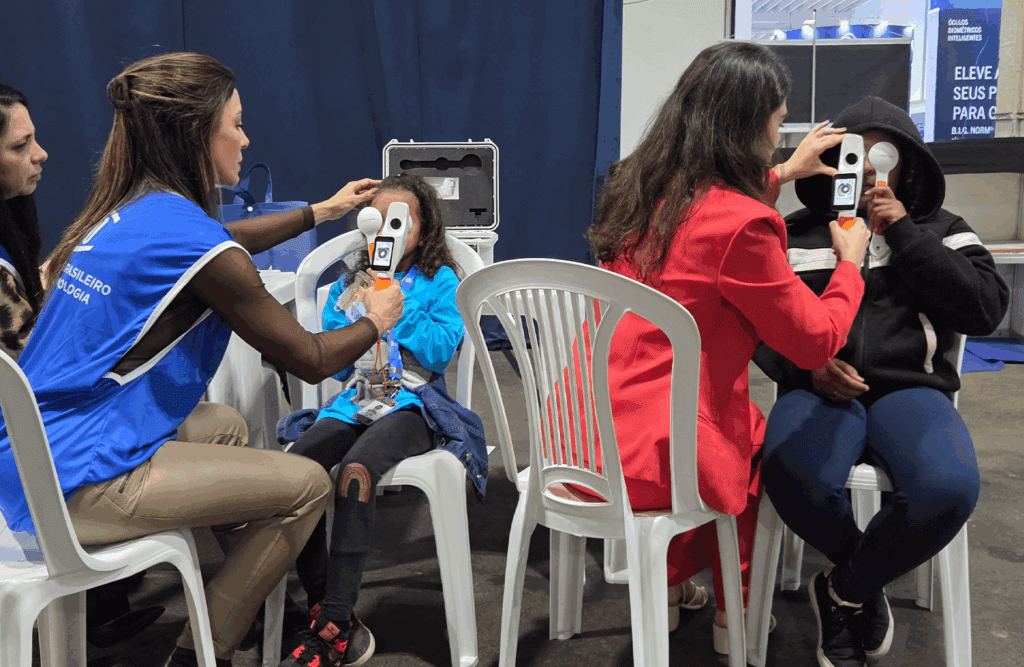
This is the third post in our series on what responsible technology evaluation for field vision care requires. Last time, we looked at what happens when you multiply “accurate enough” by millions.
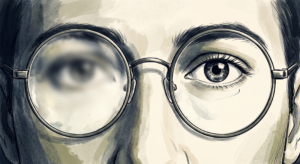
Myopia is the fastest-growing cause of visual impairment worldwide. By 2050, half the world’s population is projected to be myopic. The majority of that growth is happening in children — and a significant portion of it in exactly the communities that field vision care programs serve.
This creates a measurement problem that doesn’t get enough attention in technology evaluations.
Children are harder to refract than adults. Accommodation — the eye’s ability to adjust focus — interferes with standard autorefraction in ways that are well documented and frequently underestimated. The conventional solution is cycloplegia: eye drops that temporarily paralyze the ciliary muscle and eliminate accommodative error. In a clinic, that’s a manageable protocol. In the field, it’s often impractical, time-consuming, and a barrier to the throughput that makes screening programs viable.
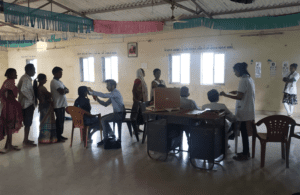
The question for field programs isn’t just whether a device works on adults in reasonable conditions. It’s whether it works on children, without cycloplegia, in the environments where those children actually live.
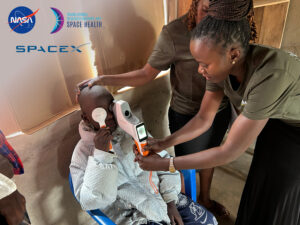
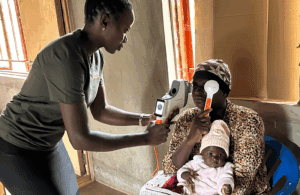
QuickSee technology was designed with an open-view measurement system that allows patients to fixate naturally during measurement. In children, this matters: natural viewing reduces accommodative effort in a way that conventional closed-view autorefractors cannot replicate. The result is more reliable measurements without the clinical overhead of cycloplegia.
The validation data support this. In a pediatric study comparing QuickSee technology against a desktop autorefractor, QuickSee performed better in children without cycloplegia — and visual acuity with QuickSee-derived corrections was equal to or better than subjective refraction in 74–77% of cases. In a separate pediatric clinical study, testability across ages three to seventeen exceeded 98%.
Hyperopes present a related challenge — and a related solution. Standard autorefraction tends to underestimate hyperopic refractive error. Open-view measurement, by reducing accommodation during the exam, produces a more complete optical picture of the hyperopic eye.
The hardest patients to measure accurately are often the ones a program can least afford to get wrong. The technology evaluation should account for that.
Next: what the depth of clinical evidence itself should tell a program about a device, before it’s deployed. Why you should expect clinical-grade capability anywhere.