

For School Nurses & District Health Teams
A clear answer for every child
not just a pass or a fail
QuickSee Free gives your team accurate, easy-to-read vision screening results grounded in published pediatric guidelines — so when a student is referred, the eye doctor starts with real measurement data, not just a note to get checked.
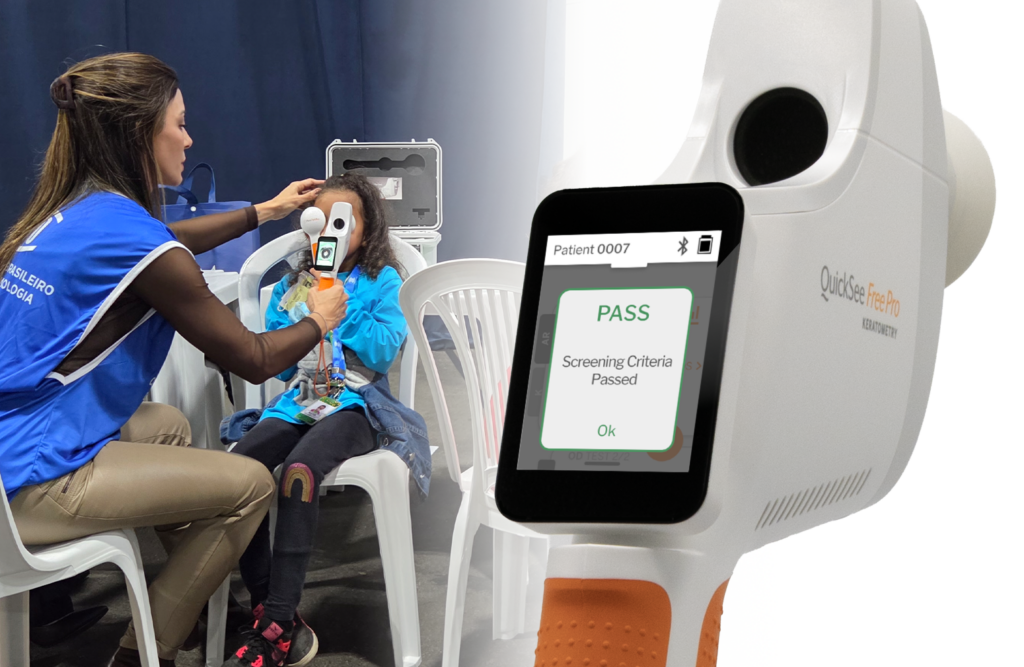
Busy days. Big rosters. Kids who can't always tell you something's wrong.
Most school vision programs run on a tight budget of time. You’re moving through a roster of dozens — sometimes hundreds — of students, and a simple pass/fail light doesn’t always give you (or a worried parent) enough to act on with confidence.
A “fail” without detail can mean a family skips the follow-up appointment. A borderline case can get missed entirely. And when a referral does go home, it often raises more questions than it answers.
Fast enough to fit the schedule
Measurement in about 45s on anyone anywhere, no dedicated exam lane required.
Accurate enough to trust
Validated in underserved and pediatric populations, with eyeglass acceptance comparable to subjective refraction.
Portable enough to follow the care
Battery-powered, works in satellite sites, mobile units, and schools.
Pediatric-ready
No dilation or cycloplegia required, reducing friction in high child-volume settings.
Clinician-centered
Reliable, detailed objective wavefront refraction data equip optometrists with powerful clinical insights.
Screening that tells you why, not just whether
QuickSee Free captures a real, detailed measurement of each eye — not a quick estimate. That same measurement is automatically compared against published pediatric screening guidelines, so you get an instant, specific result: Screening Criteria Passed or Screening Criteria Failed, with a clear reason behind it.
No manual interpretation. No guessing. No second visit just to find out what the first one actually meant.
Three steps. About 10 seconds per eye. Real answers.
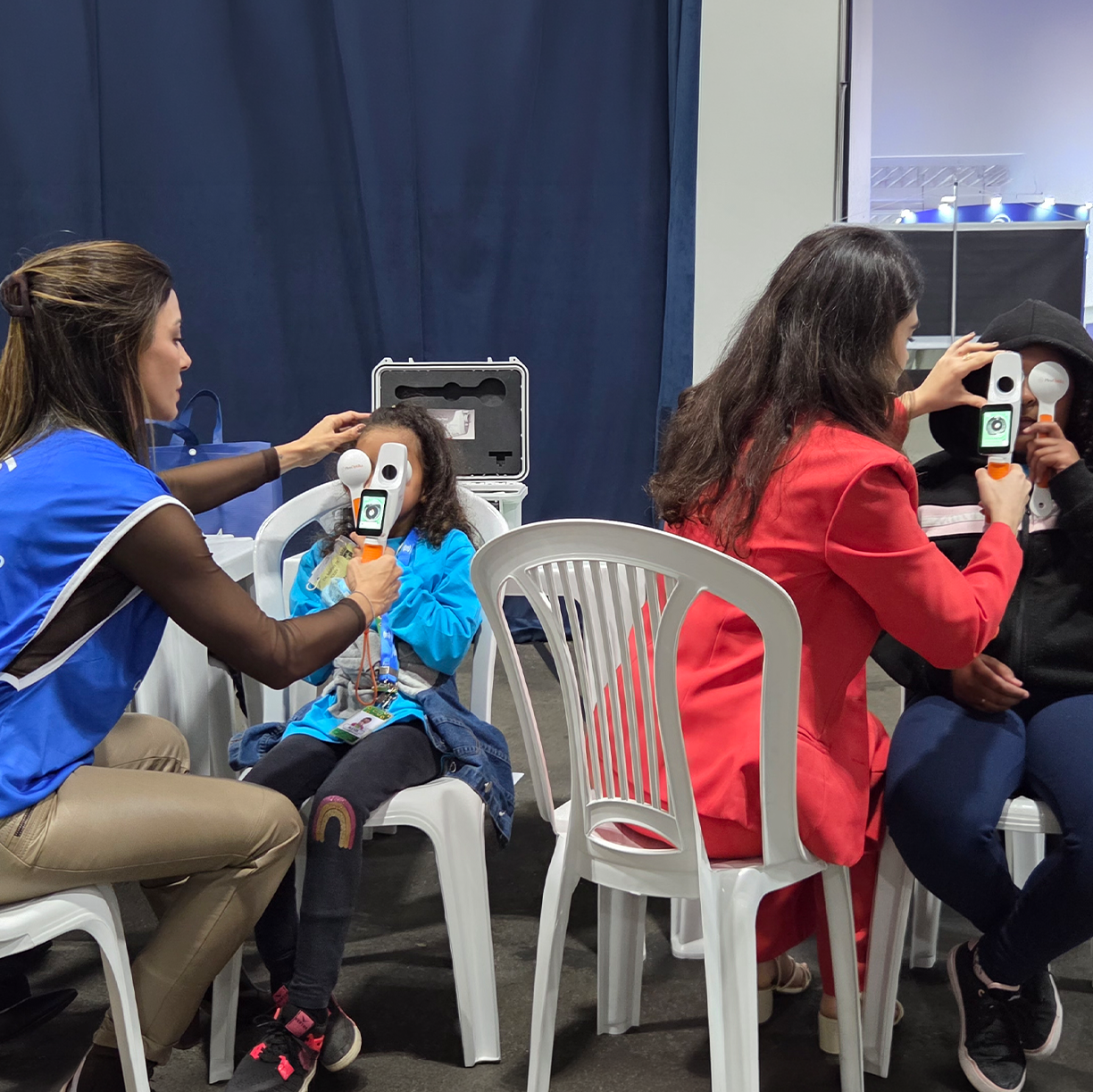
1. Measure

2. See the result

3. Act with confidence
From screening to the right pair of glasses — faster
QuickSee Free performs objective refraction for every student it measures — the same type of measurement used as part of a full eye exam. So instead of a simple pass/fail, you’re capturing real data on exactly what’s going on with a child’s vision.
When a referral is needed, that data goes with it. Instead of a note that just says “please examine this child,” the optometrist starts with an actual, objective starting point — fewer guesses, and a more direct path to a prescription and glasses that actually correct the problem.
FAQs
Does this replace an eye exam?
No. QuickSee Free is a handheld autorefractor — it performs objective refraction, one of the core measurements used in a full eye exam. Screening Mode compares that measurement against published pediatric guidelines to flag students who should see an eye care professional. The clinical decision always stays with the child’s eye doctor.Do we need a dark room or special space?
No. QuickSee Free is designed to work in normal, well-lit rooms — including outdoors — so it fits into whatever space your school already has available.How much training does staff need?
Most staff are comfortable running screenings after about 30 minutes of hands-on training.What age range is this for?
QuickSee Free is validated for children roughly age 3 and up — it’s not intended for infant or toddler screening.What happens to a student's results?
Each result and its supporting data are saved and can be included in a report for the family and the referred eye care provider. All student results are saved in the no-cost Companion App for easy management of bulk records, and can be exported into spreadsheets or connected into a healthcare provider’s electronic record system.
Lower the barrier between a vision problem and the right pair of glasses
QuickSee Free doesn’t just find the students who need care — it gives their eye doctor a real, objective starting point, so kids get to an accurate prescription faster and with fewer extra steps. See how it fits into your district’s screening day.
QuickSee Free enables clinicians to perform refraction using objective measurements. Clinical judgment and comprehensive eye examinations remain the responsibility of the licensed provider.