
Multimodal handheld autorefractor + keratometer
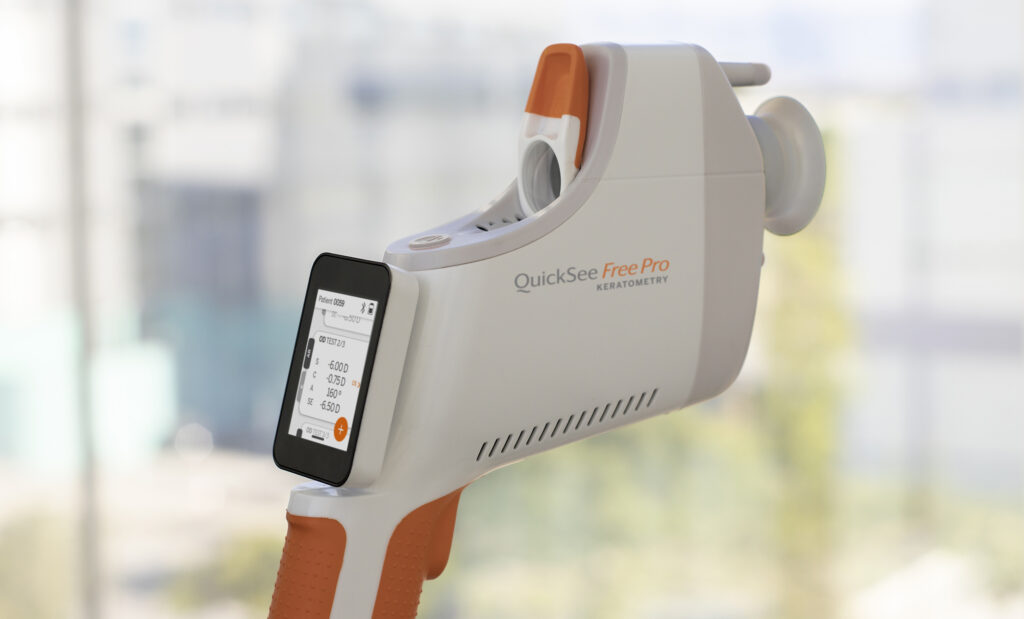
Portable AR/K for the clinic and mobile screening: QuickSee Free Pro by PlenOptika
Deliver better vision care with the world’s most accurate handheld autorefractor.¹
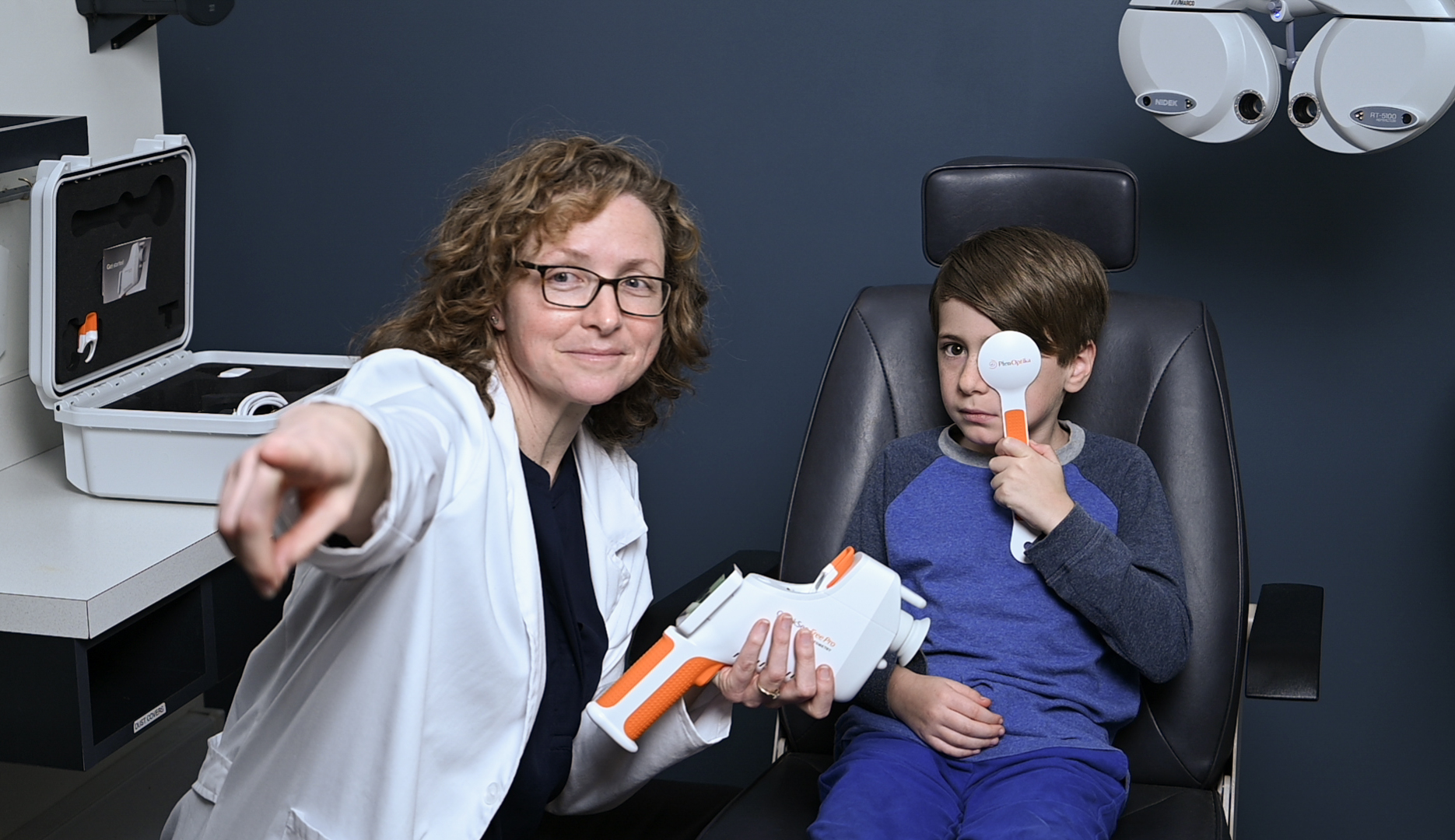
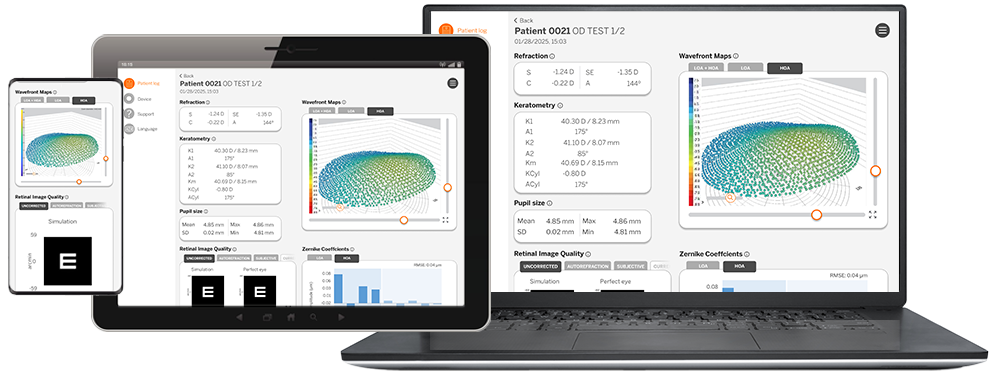
By combining open-view design, wavefront aberrometry, and keratometry, QuickSee Free Pro delivers multimodal insight into low- and high-order aberrations—helping clinicians make more accurate and personalized refraction recommendations.
Get a fuller picture: autorefraction + keratometry in one handheld measurement
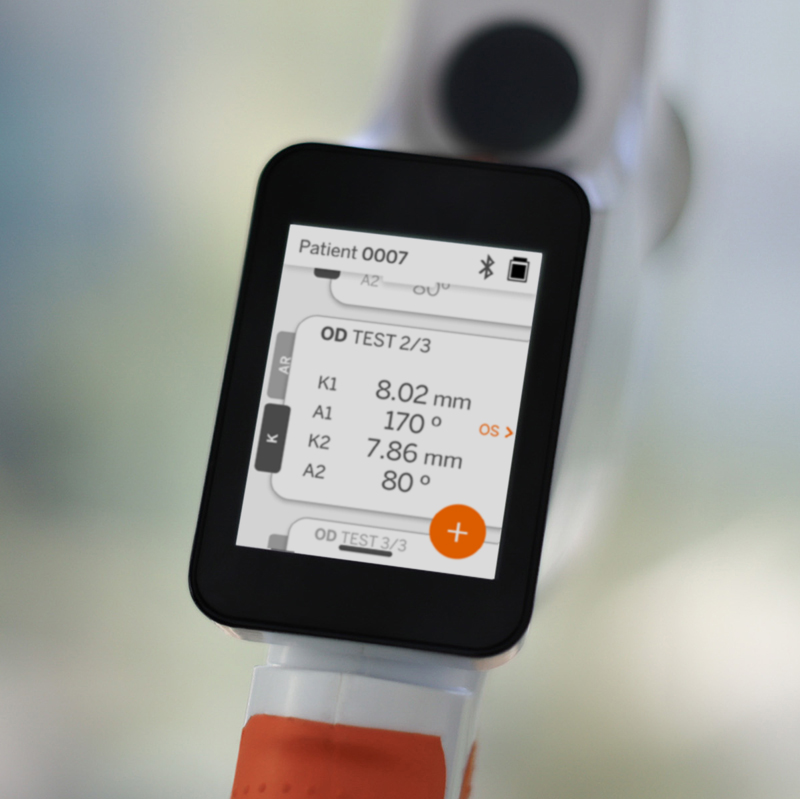
QuickSee Free Pro’s keratometry capability brings corneal-curvature measurement into a portable AR/K format—useful in clinic and mobile settings. It provides objective K readings to pair with autorefraction when you need a more complete view of the eye’s optical system.
Get a QuickSee Free Pro demo—or try it in your practice for 10 days.
See how fast, accurate handheld autorefraction can support your workflow and help you grow your practice.
Why QuickSee Free Pro
Key features
Wavefront aberrometry
Measures ocular aberrations and refractive errors—including low- and high-order aberrations—for a more complete optical picture.
Portable
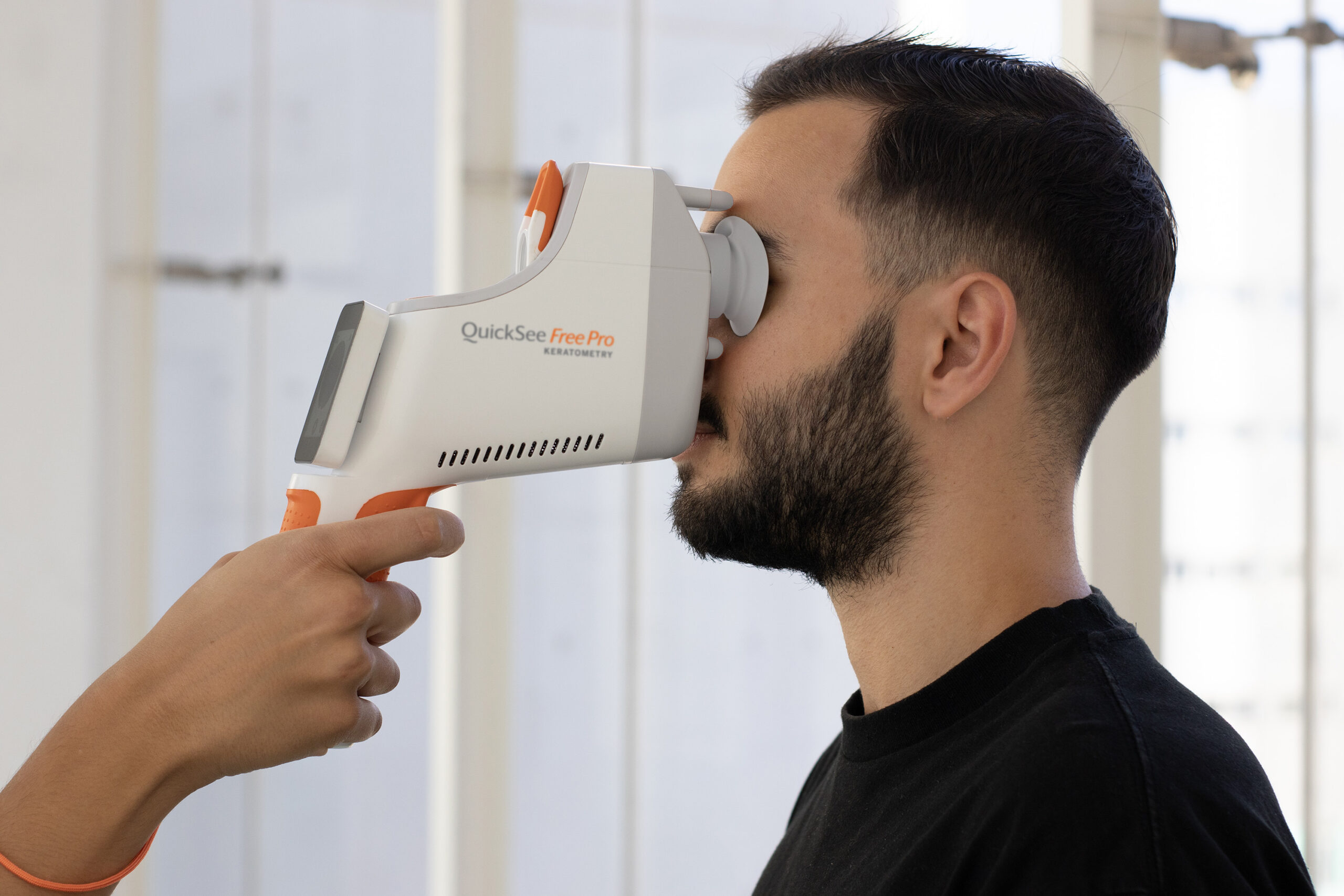
Handheld AR/K for clinical workflow flexibility and mobile screening.
Dynamic measurements
Produces results with measurement-confidence indicators designed to support consistent readings.
Open view
Reduces patient accommodation for more reliable measurements.
Affordable autorefraction
Desktop-grade accuracy at a fraction of the price.
Patient- and operator-friendly
Patient-friendly flexibility (including children)
- Suitable for measuring children, with fogging lenses that can support pediatric exams
- Supports patients with mobility or positioning challenges
- Works with bedbound patients
Easy to learn and use
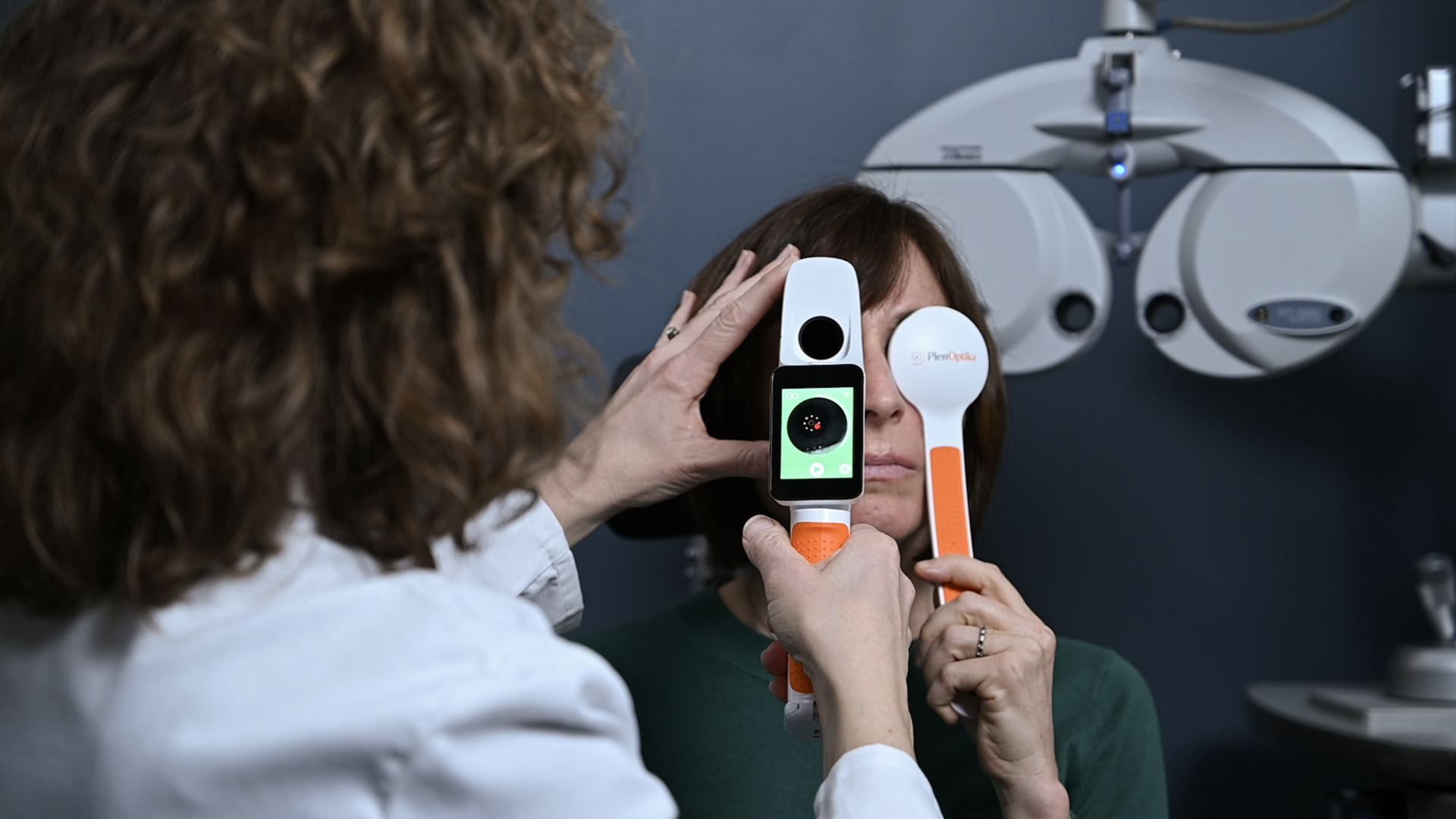
- Operators can be up and running in minutes
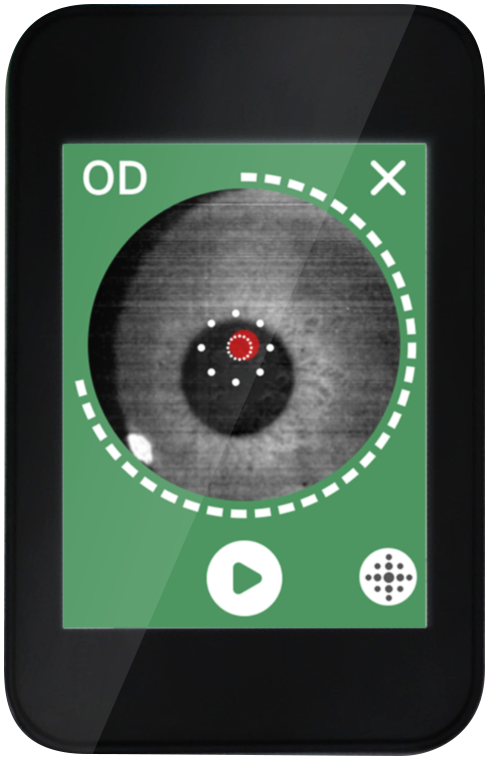
- Pupil camera aids alignment
- Accelerates subjective refraction with a more accurate starting point
Accuracy
Strong agreement with subjective refraction
QuickSee Free technology competes with the best desktop autorefractors for accuracy.
<= 0.25 D: 70-75% of patients
<= 0.5 D: 80-90% of patients (see publications)
Use cases
Unmatched performance in the clinic and in the field
QuickSee Free Pro’s combination of open-view binocular design, wavefront aberrometry, and dynamic measurements produces clinically accurate autorefraction and keratometry in a durable handheld format—well-suited for the clinic, optical shop, and mobile care (e.g., senior living centers or school settings).
Validation
As a mission-driven technology innovator, we put a premium on data-backed findings in rigorous, peer-reviewed research.
Our original and independently-authored research findings indicate:
- Portable autorefraction can extend refractive care in low-resource and remote settings;
- Prescriptions derived from PlenOptika technology often align closely with subjective refraction with similar visual acuity for many patients, alongside generally positive acceptance/preference patterns in multiple studies;
- The devices perform high pediatric testability and strong screening discrimination for significant refractive error and targeted pediatric vision conditions;
- Advanced analytics (machine learning and dynamic wavefront methods) are repeatedly associated with improved agreement/precision, and wavefront/HOA measures show reliability comparable to desktop wavefront systems in the contexts described.

"With so many patients to see in a short time, we had to go very fast. QuickSee was a tremendous asset."
Alan Glazier, OD
Shady Grove Eye and Vision Care (Rockville, MD) and ODs on Facebook community leader, who used QuickSee in a mission to hurricane-devastated islands

"A significant bottleneck in giving corrective glasses to the over a billion people who need them is the inability to provide an accurate prescription. There just aren’t enough skilled people available to do this nor the right technology that is accurate, easy to learn, affordable and portable. This indeed is the urgent innovation need of the day to help people see better."
Thulasiraj Ravilla
Director-Operations, Aravind Eye Care System

"It was for me love at first sight on the equipment that I wanted, and we got it. What the ideal thing of QuickSee is that it's very accurate… QuickSee is the best solution for this that I’ve seen, and the most affordable one."
Bijan Azami
Founder, Two Billion Eyes
Get QuickSee Free Pro
We invite you to learn how QuickSee Free Pro can benefit your practice: Accelerating workflows and providing more accurate and personalized recommendations for your patients.
If you’re ready for a 10-day trial in your practice right now, click the button immediately below. Or if you’d like to learn more and get an online demo first, tell us more about yourself below. One of our associates will reach out to you by telephone or email shortly to answer your questions and arrange a next step.
Want a trial device right away?
If you would like to try QuickSee Free or QuickSee Free Pro in your practice, please visit our Trial Program page to act quickly.
Clinical performance specifications
| AUTOREFRACTOR | |
| Pupil size | 2 to 8 mm |
| Intended patient population | >= 3 years |
| Accommodation control | Open view, Fogging lens (optional) |
| Cycloplegia requirement | None |
| Dilation requirement | None |
| Illumination requirement | None |
| Acquisition time | 5, 10 seconds |
| Spherical range | -13D to +10D, increments of 0.01D, 0.125D, 0.25D |
| Cylindrical range | -8D to +8D, increments of 0.01D, 0.125D, 0.25D |
| Axial range | 0–180º, increments of 1º, 5º, 10º |
| Base technology | Wavefront aberrometry |
| KERATOMETER | |
| Radius of curvature | 5 to 12 mm in 0.01 mm increments |
| Corneal astigmatism | 0 D to +/- 8 D (R 5 to 12mm) |
| Center | Diameter 3.2 mm at Radius of curvature 8 mm |
| Pupil size measurement | Displayed in advanced refraction metrics, Companion App, and printed results |
Technical specifications
| Measurement modes (QuickSee Free Pro) | Simultaneous AR and K, AR only, and K only |
| Display properties | 2.4-inch LCD, capacitive touch screen, readable outdoors, true color (65,536 colors) |
| Charger properties | USB-C medical grade wall adapter, AC 100 to 240V, 50/60 Hz |
| Battery | 6 hours continuous use +/– 1 hour (10,000 mAh Li-ion); 3 hours charge time (5% - 75%); 5 hours charge time (0% - 100%); IEC 62133-2:2017 certified |
| Calibration | Factory calibrated; no field calibration needed |
| Measurement capacity | Measurement storage capacity: > 10,000 measurements |
| Regulatory classification (medical device) | Class I FDA (USA), Class IIa Product CE, MDR Compliant, Class IIa, UKCA, MDR 2002 Compliant |
| Laser safety | Class 1, IEC 60825-1:2014 certified |
| Weight | < 750 grams / 1.65 lbs |
| Dimensions | 30 cm (H) x 5.5 cm (W), 18 cm (L) |