
NEW

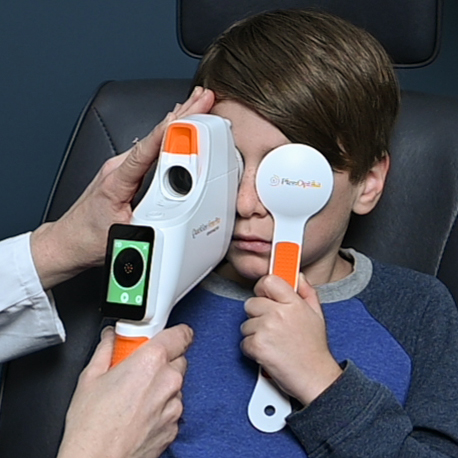

Accurate autorefraction anywhere
Lightweight
Desktop power in a handheld autorefractor, portable enough to go where care is needed
Fast
Measurements in 10 seconds, fast enough to keep up with a full schedule
Easy to use
Modern, intuitive operator and patient experience, simple enough for any team member to use with confidence
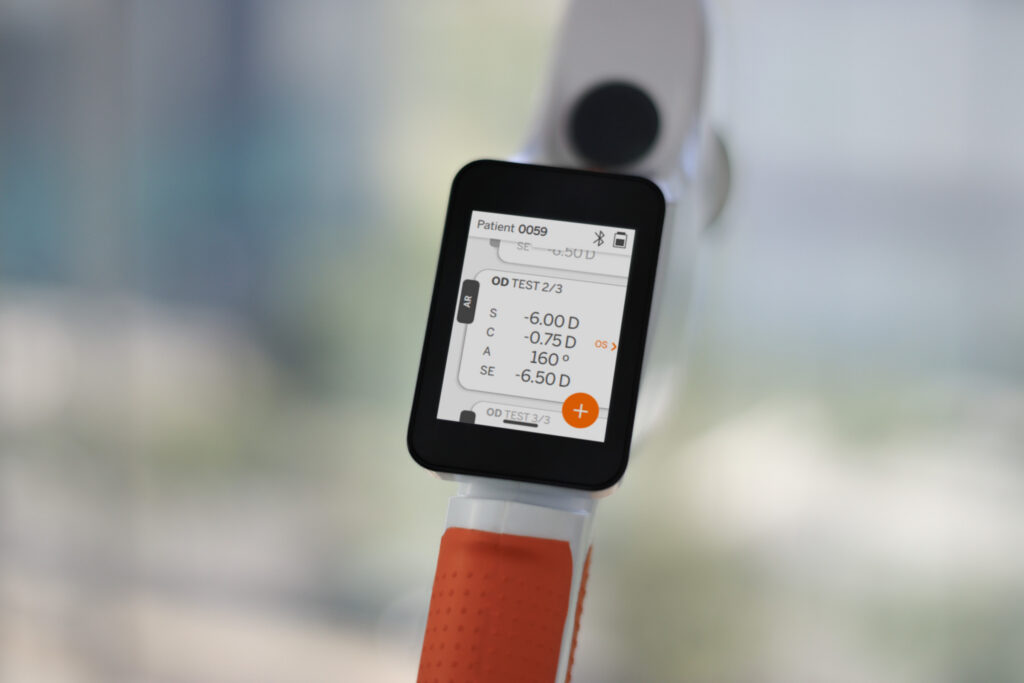
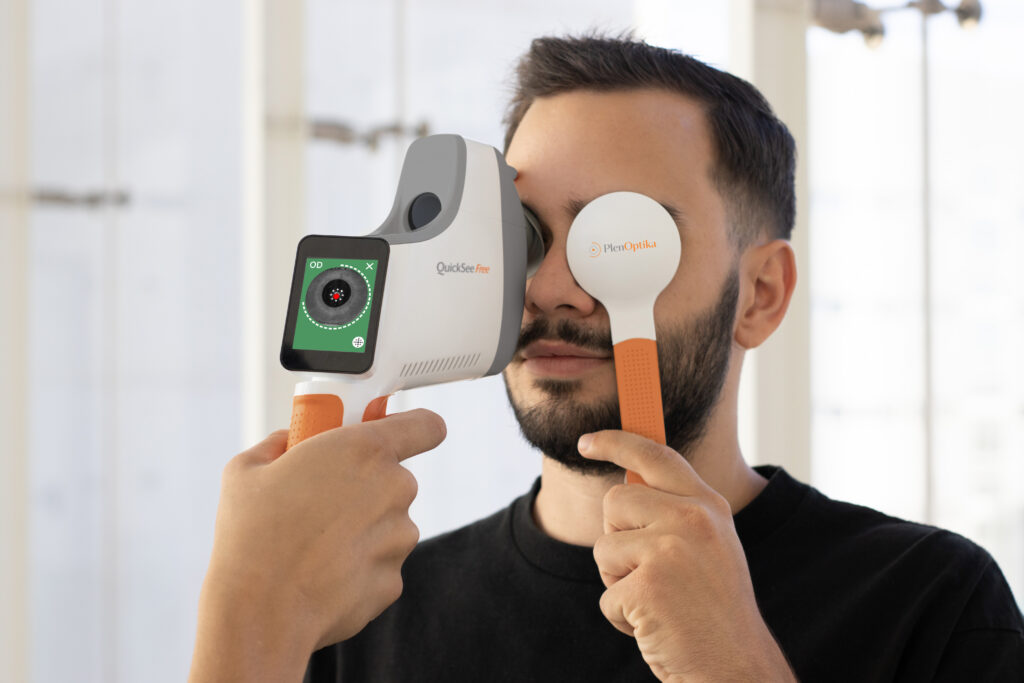
Built for clinicians who need to see more patients without cutting corners on data
Our handheld autorefractor’s combination of the open view design, wavefront aberrometry, and innovative measurement algorithms produces clinically accurate autorefraction measurements, in a durable handheld format suitable for use in clinics and in the field.
Screening mode
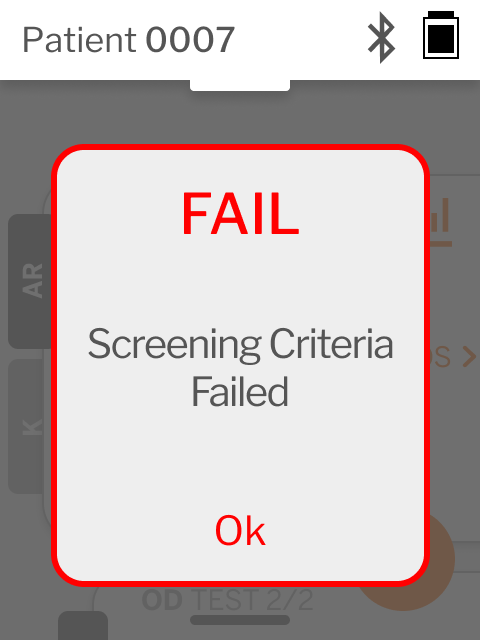
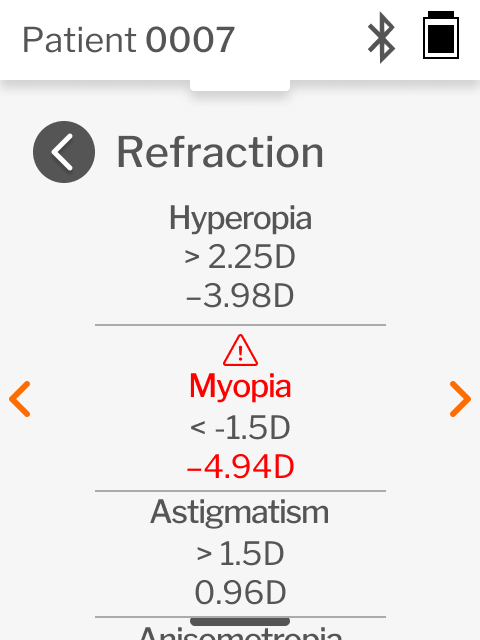
Turn every screening into clinically actionable data
Most screeners return a binary pass/refer with no breakdown of what drove the result. QuickSee Free tells you which parameters triggered the flag, the measured values, and the thresholds applied. That’s the difference between a referral and actionable clinical data.
IDEAL FOR
- Schools, community outreach, and mobile programs
- Elder care and nursing home rounds
- Mixed-age and general populations
- Diverse populations
Built on technology proven in space
QuickSee Free’s wavefront-based measurement approach has been part of PlenOptika’s collaboration with the Translational Research Institute for Space Health (TRISH) since 2021, including pre- and post-flight vision measurements for an ISS mission.
Space research collaboration | QuickSee Free on Polaris Dawn




QuickSee Free advantages
Friendly to all kinds of patients
- Accessible for patients with mobility issues and/or physical challenges (ADA Compliant)
- Works with bedbound patients
- Fogging lenses for pediatric exams
Easy to learn and use
- Operators can be up and running in minutes
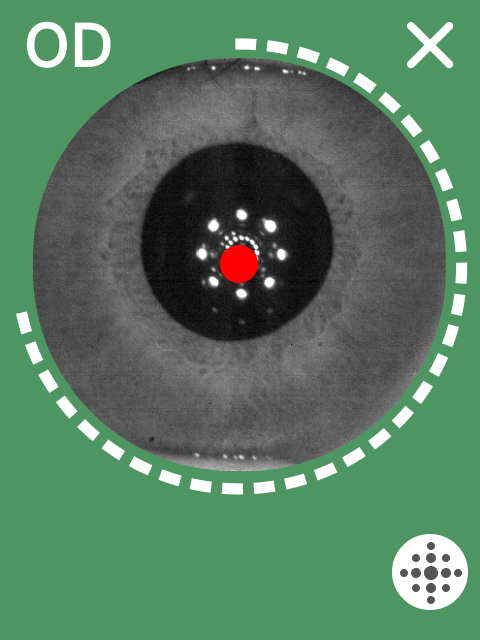
- Pupil camera aids alignment
- Accelerates subjective refraction with a more accurate starting point
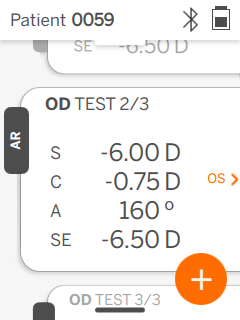
- Companion App connects to keep patient logs and autorefraction results in one place
Strong agreement with subjective refraction
- <= 0.25 D: 70-75% of patients
- <= 0.5 D: 80-90% of patients (see publications)
Field durable
- Calibration free
- Operates in humid and dusty environments
- Can be used indoors and outdoors, in most light settings
- Includes hardened carrying case
- Up to 8 hours continuous use on battery, operates while tethered for charging
Technical specifications
| Pupil size | 2 to 8 mm |
| Intended patient population | >= 3 years |
| Accommodation control | Open view, Fogging lens (optional) |
| Cycloplegia requirement | None |
| Dilation requirement | None |
| Illumination requirement | None |
| Acquisition time | 5, 10 seconds |
| Spherical range | -13D to +10D, increments of 0.01D, 0.125D, 0.25D |
| Cylindrical range | -8D to +8D, increments of 0.01D, 0.125D, 0.25D |
| Axial range | 0–180º, increments of 1º, 5º, 10º |
| Base technology | Wavefront aberrometry |
General specifications
| Measurement modes (QuickSee Free Pro) | Simultaneous AR and K, AR only, and K only |
| Display properties | 2.4-inch LCD, capacitive touch screen, readable outdoors, true color (65,536 colors) |
| Charger properties | USB-C medical grade wall adapter, AC 100 to 240V, 50/60 Hz |
| Battery | 6 hours continuous use +/– 1 hour (10,000 mAh Li-ion); 3 hours charge time (5% - 75%); 5 hours charge time (0% - 100%); IEC 62133-2:2017 certified |
| Calibration | Factory calibrated; no field calibration needed |
| Measurement capacity | Measurement storage capacity: > 10,000 measurements |
| Regulatory classification (medical device) | Class I FDA (USA), Class IIa Product CE, MDR Compliant, Class IIa, UKCA, MDR 2002 Compliant |
| Laser safety | Class 1, IEC 60825-1:2014 certified |
| Weight | < 750 grams / 1.65 lbs |
| Dimensions | 30 cm (H) x 5.5 cm (W), 18 cm (L) |