Objective refraction is an essential technique in modern optometry and ophthalmology, providing a critical baseline for personalized prescriptions and efficient exams. Wavefront aberrometry has emerged as the gold standard in objective refraction technology, offering superior accuracy, broader diagnostic insight, and unmatched versatility. But not all autorefractors are created equal. At the forefront of this innovation are QuickSee Free and QuickSee Free Pro, two handheld devices from PlenOptika that bring high-performance wavefront technology to any clinical or outreach setting.
What sets wavefront aberrometry apart?
Traditional autorefractors often rely on photorefraction or eccentric photorefraction, methods that can be susceptible to variability due to ambient lighting, patient movement, or eye accommodation. These techniques are useful but limited in precision—particularly for measuring cylinder and axis, the most complex components of refraction.
Wavefront aberrometry, by contrast, analyzes the way light is distorted as it passes through the eye’s optical system, providing a more comprehensive map of both low- and high-order aberrations. This allows clinicians to:
- Achieve greater agreement with subjective refraction
- Detect subtle irregularities affecting vision quality
- Identify needs for advanced evaluation
- Confidently prescribe without relying solely on patient feedback
QuickSee Free Pro: Wavefront maps in the palm of your hand
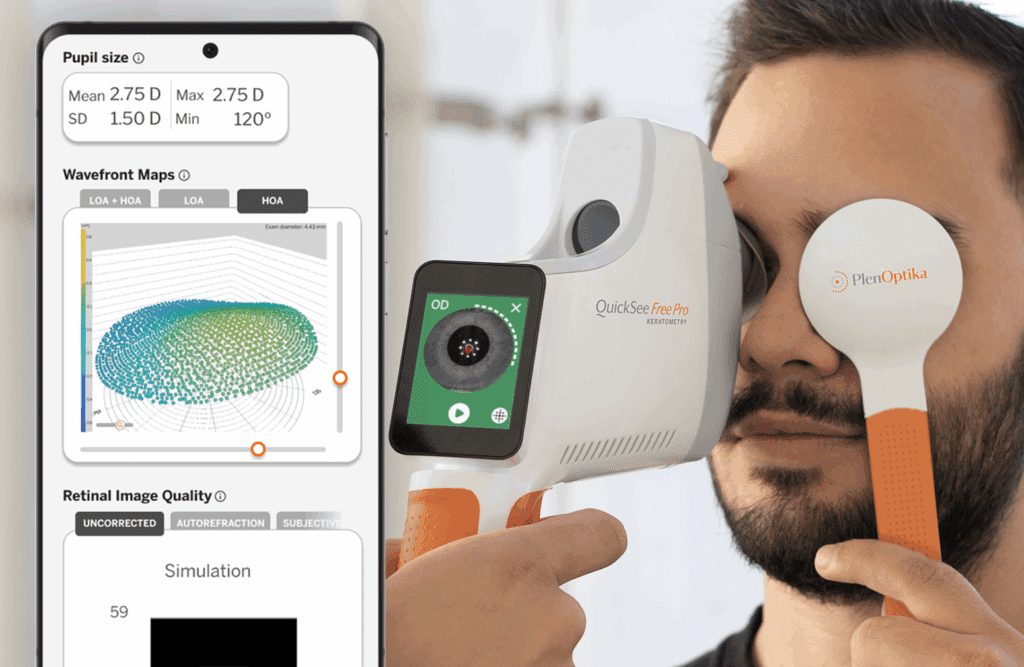
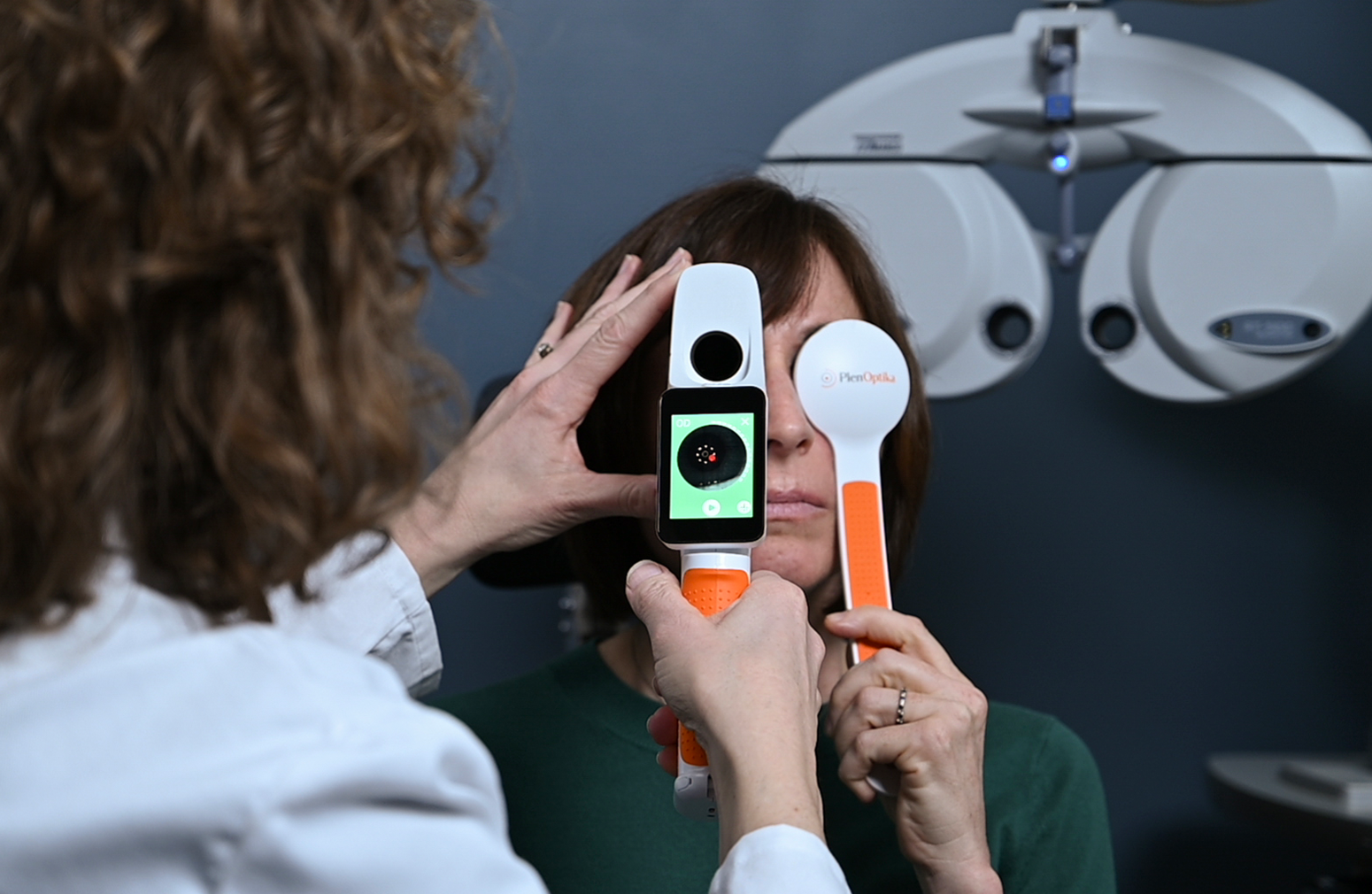
QuickSee Free Pro combines this advanced optical method with an open-view design and patented measurement algorithms. The result is a fast, accurate, and comfortable exam experience for patients and providers alike. Measurements are completed in 10 seconds, and the device requires no special lighting, dilation, or calibration.
In clinical studies, QuickSee Free Pro has demonstrated results within 0.25 diopters of subjective refraction in up to 75% of patients and within 0.5 diopters in up to 90% of patients—a level of precision similar to high-end desktop systems. It seamlessly integrates with the Companion App, which provides easy access to detailed wavefront maps, Zernike coefficients, and acuity simulations for deeper diagnostic insights and clearer patient communication.
In addition to enhancing prescription accuracy, wavefront aberrometry in QuickSee Free Pro helps providers flag potential problems that may require further clinical attention. Its ability to reveal higher-order aberrations inline with standard autorefraction means clinicians can spot signs of ocular irregularities earlier—without the need for additional screening devices. This not only strengthens clinical decision-making, but also saves time and simplifies the overall workflow.
Practical benefits in real-world settings
From global vision care missions to busy ophthalmology clinics, QuickSee Free and QuickSee Free Pro prove that wavefront aberrometry is not only more accurate, but also more adaptable. The devices are ideal for:
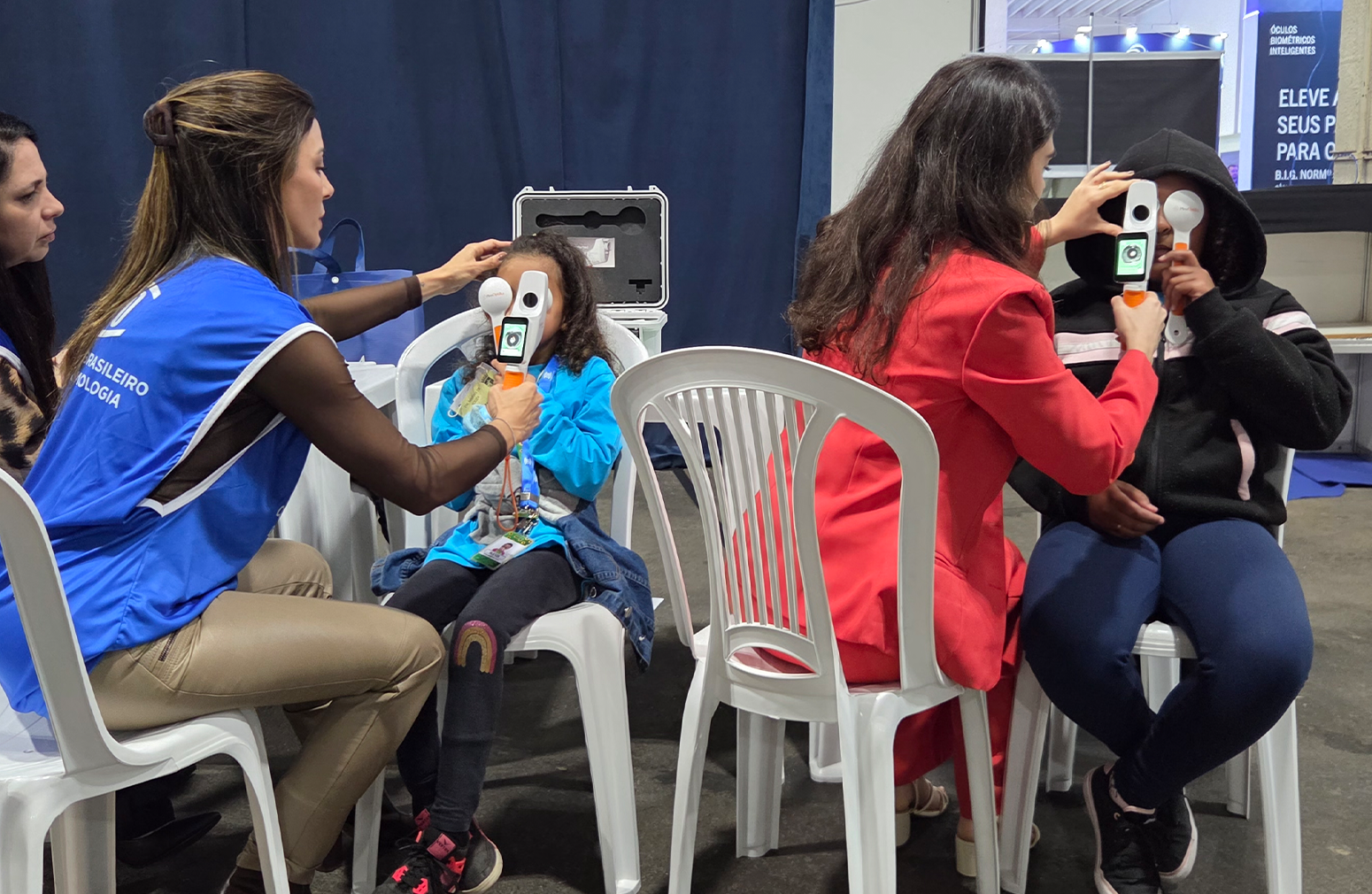
- Pediatric assessments without cycloplegia
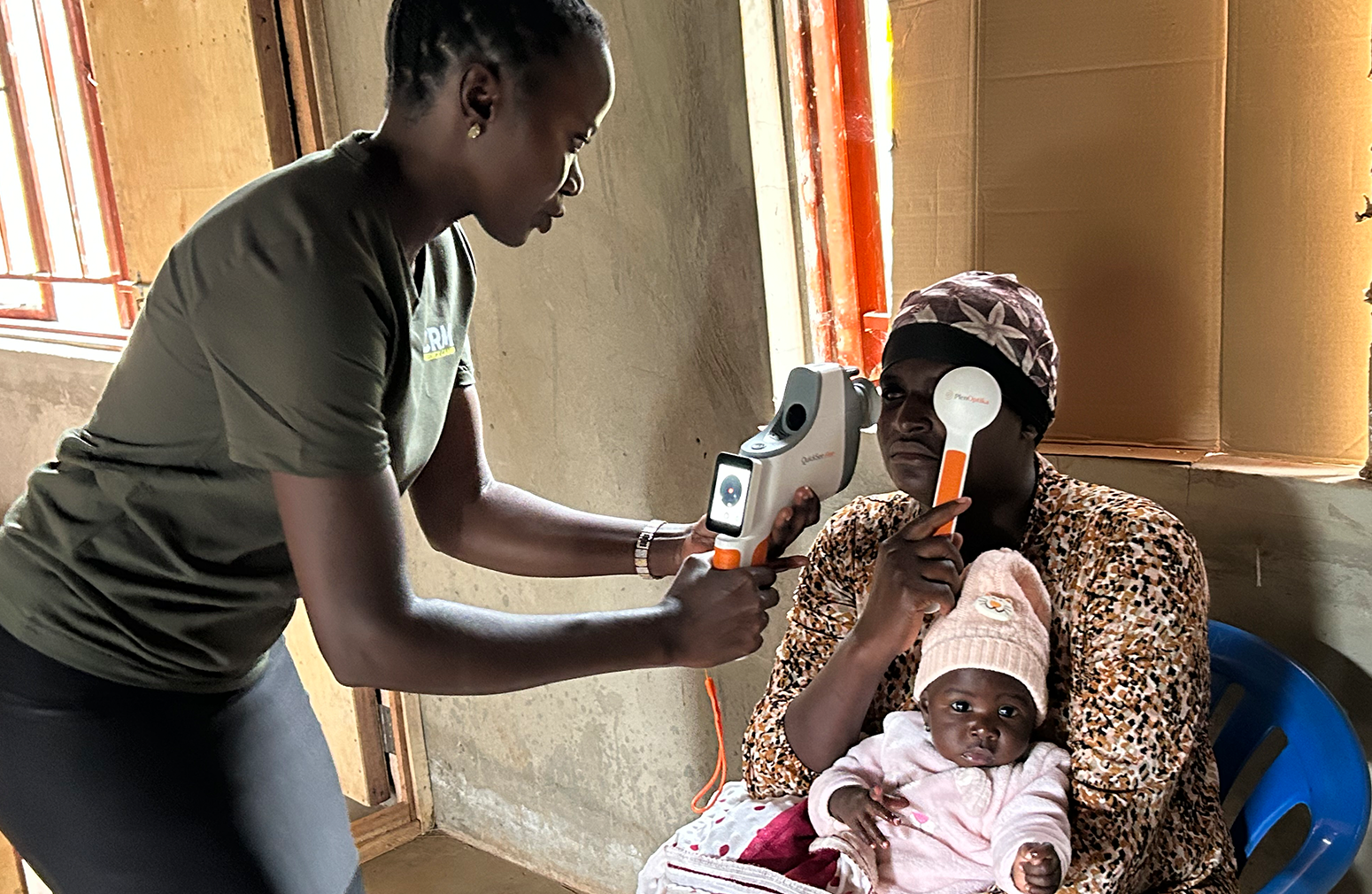
- Mobile care units and remote screenings
- High-throughput clinics needing efficient objective refraction
Doctors and NGOs around the world have adopted QuickSee Free Pro for its ability to deliver desktop-level precision in environments where traditional equipment simply won’t work.
Advancing objective refraction with wavefront aberrometry: fast, convenient and powerful
Wavefront aberrometry is redefining what’s possible in autorefraction. With QuickSee Free Pro, eye care professionals can harness the full power of this technology in a portable, patient-friendly format. Whether you’re working in a clinic, classroom, or rural community, you can now provide gold-standard objective refraction anywhere it’s needed.
The future of vision care isn’t just more accurate. It’s more accessible. And with wavefront aberrometry, it’s already here.