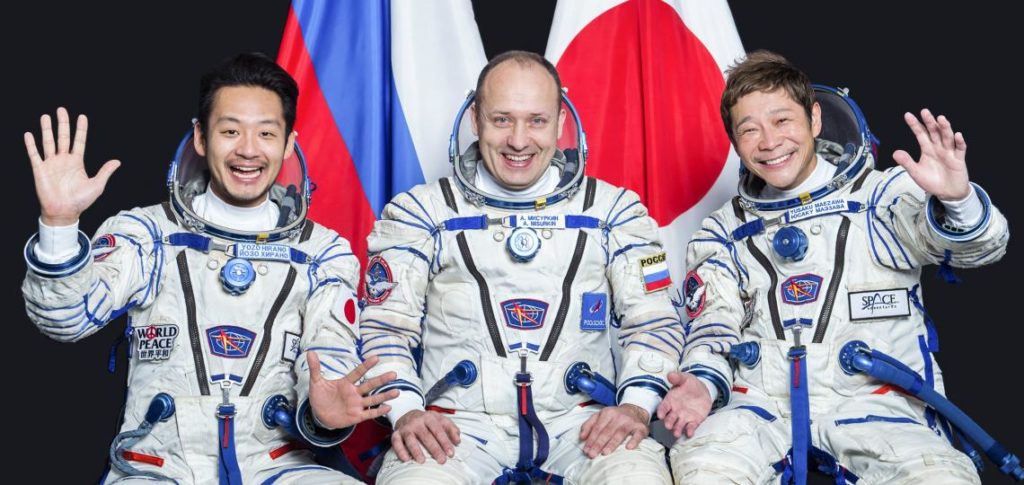
Research and development for space research and for global health impact have common requirements: engineering for the toughest conditions, and rigorous design to achieve high standards of accuracy, usability, efficiency, and durability. When we began collaborating with the Translational Research Institute for Space Health (TRISH), we had a device—called QuickSee—that could radically change how vision care was performed for people outside well resourced vision clinics. That’s why QuickSee was selected to measure the vision of a visitor to the International Space Station before and after his flight in December 2021.
The MS-20 astronauts in December 2021. QuickSee was used to measure the pre- and post-flight vision of Yozo Hirano, at left.
The collaboration in space health research helped to drive development of our second commercial device, QuickSee Free. It had to be smaller, easier to use, and provide precise and comprehensive optical analysis of the patient’s eye. QuickSee Free Pro was ultimately brought aboard the five-day Polaris Dawn mission, which took astronauts the farthest from Earth since the Apollo missions. The astronauts used it to conduct research on Spaceflight Associated Neuro-Ocular Syndrome (SANS) a key risk faced in long-duration flight by most astronauts. The historic mission tested many other innovative technologies that can make long duration space flight possible.
The astronauts of the Polaris Dawn mission in September 2024, who used QuickSee Free Pro to measure their vision changes in microgravity.
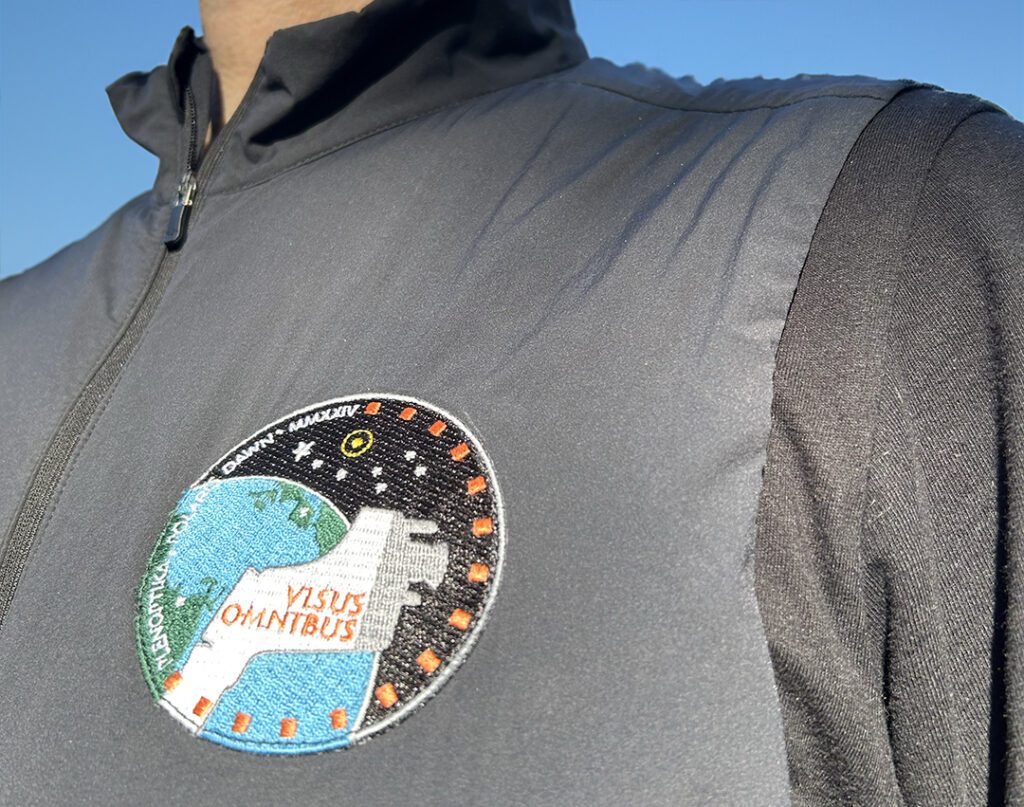
Commemorative patch
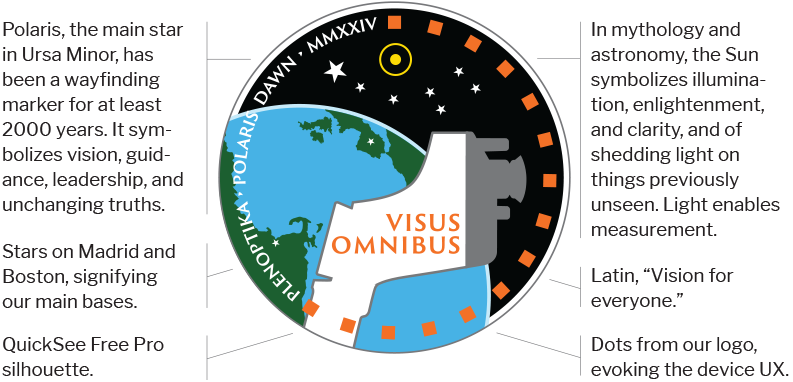
We designed this patch to commemorate our participation in space health research and QuickSee Free Pro’s role in the boundary-pushing Polaris Dawn mission. Modeled on the classic patches of the Apollo era and those of the more recent SpaceX flights setting new standards for space exploration, our patch encapsulates details of our past, achievements of our present, and our enduring aspirations.
Are you ready to learn how to use QuickSee Free / Free Pro effectively? Tell us about yourself and your circumstances and we will reach out to arrange a training session with you.